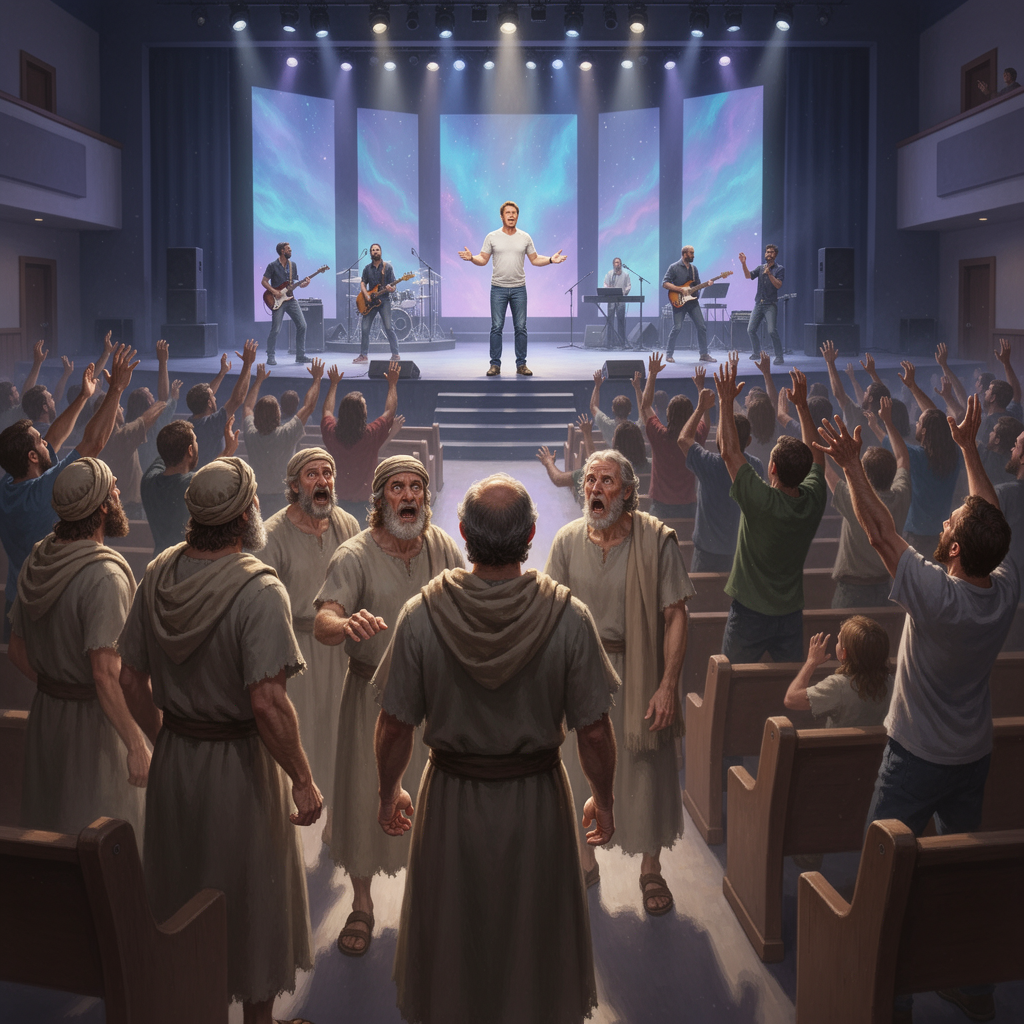
Early Christians Visit a Modern Church According to AI
User:
Hello, how do you think the early Christians of the New Testament would react if they traveled into the future and saw how the modern churches worship today as compared to the warnings in scripture of false teachers creeping in to deceive the sheep?
AI Assistant:
Hello! The early Christians would view the situation with both concern and sorrow. Here are a few scriptural passages and principles that would inform their reaction:
Revelation 2:2-6 "I know thy works, and thy labour, and thy patience, and how thou canst not bear them which are evil: and thou hast tried them which say they are apostles, and are not, and hast found them liars:
And hast borne, and hast patience, and for my name's sake hast laboured, and hast not fainted.
Nevertheless I have somewhat against thee, because thou hast left thy first love.
Remember therefore from whence thou art fallen, and repent, and do the first works; or else I will come unto thee quickly, and will remove thy candlestick out of his place, except thou repent.
But this thou hast, that thou hatest the deeds of the Nicolaitans, which I also hate."
This passage highlights the importance of maintaining initial faithfulness and commitment to exposing false teachers by the light of the scriptures and a judgement of the deeds of the Nicolatians. The exact nature of the Nicolaitan teachings is not clearly defined within the New Testament text itself, leading to different interpretations among scholars.
Potential Interpretations:
Some interpret the Nicolaitans as teaching that God's law (specifically the Mosaic Law) was done away with or no longer necessary for believers.
Others suggest they promoted a more relaxed view of moral standards or practices, possibly encouraging a life style that diverged from traditional Christian teachings.
Didache Reference:
The Didache, an early Christian document, mentions the Nicolaitans in a negative light, describing them as "evildoers" who teach for gain.
This suggests they may have been engaged in activities or teachings that were seen as corrupting the faith and practices of the church.
2 Peter 2:1-3 But there were false prophets also among the people, even as there shall be false teachers among you, who privily shall bring in damnable heresies, even denying the Lord that bought them, and bring upon themselves swift destruction.
And many shall follow their pernicious ways; by reason of whom the way of truth shall be evil spoken of.
And through covetousness shall they with feigned words make merchandise of you: whose judgment now of a long time lingereth not, and their damnation slumbereth not.
This passage warns about false prophets and teachers who introduce corrupt doctrines that deny the Lord Jesus Christ. It notes that such false teachings will lead to swift destruction for those who follow them and cause others to question the way of truth. The false teachers are characterized by their greed, using deceitful words to exploit people financially. The judgment against these false teachers is sure and certain.
Jude 1:3 "Beloved, when I gave all diligence to write unto you of the common salvation, it was needful for me to write unto you, and exhort you that ye should earnestly contend for the faith which was once delivered unto the saints."
This verse highlights the importance of standing firm in the faith and warns against those who corrupt it with immoral behavior and denial of key biblical teachings of Christ and the Apostles.
Given these scriptures, early Christians would react with a sense of foreboding or sorrow, recognizing the potential for false teachings and practices that stray from biblical Christianity. They would be concerned about doctrinal dilution, loss of fervor and reverence in worship and service, and the overall departure from the original teachings and practices found in the Bible.
However, they would also likely maintain hope and faith in God's sovereignty and His desire to preserve truth through His faithful people. As Paul writes in 2 Timothy 4:1-4:
"I charge thee therefore before God, and the Lord Jesus Christ, who shall judge the quick and the dead at his appearing and his kingdom; Preach the word; be instant in season, out of season; reprove, rebuke, exhort with great patience and instruction. For the time will come when they will not endure sound doctrine; but after their own lusts shall they heap to themselves teachers, having itching ears; And they shall turn away their ears from the truth, and shall be turned unto fables."
In summary, early Christians would likely see modern churches as a mixed picture containing both faithful believers and those who have wandered into error. They might feel a deep sense of responsibility to stand firm in the faith and warn others against false teachings, much like they were warned about in the New Testament.